|
| NO. 75 · OCTOBER 25, 2026 |
|
|
In this issue
|
|
The Ticket-Taker Is Back
Midnight Movie Club II, our first Original short film, is out now on PREVO. Stream it here.
|
|
|
|
Reviews for Midnight Movie Club II
Your Notes – yes, yours! – on Midnight Movie Club II so far. Keep reviewing the film and leaving your thoughts on it after you watch it; we’ll be continually posting the best ones.
|
|
|
|
Miles Stephenson Reviews Digger
The Tom Cruise Oscar campaign vehicle was a flop at the box office and highly divisive with critics. Those who love it say it’s exactly the kind of big, daring movie that movie stars and major studios should make more often. Those who hate it have called it an ego-driven folly from Cruise and the rest involved. But which camp does our chief film critic, Miles Stephenson, fall into? Read his full review below.
|
|
|
|
13 Nights of Horror (and Cut Me If You Can)
We’re selecting one PREVO horror short a night through Halloween. See the selections so far and read more about our surprise premiere from this past Tuesday, Cut Me If You Can, directed by Sylvain Loubet and Nicolas Polixene.
|
|
|
|
The PREVO Ten, No. 09
The ten most-watched and most-talked-about films on PREVO from the week of October 12 – 18. Check back next Sunday to see how Midnight Movie Club II performed in its first week.
|
|
|
|
A note on Midnight Movie Club II and the future of PREVO Originals By Ryder McNeal
|
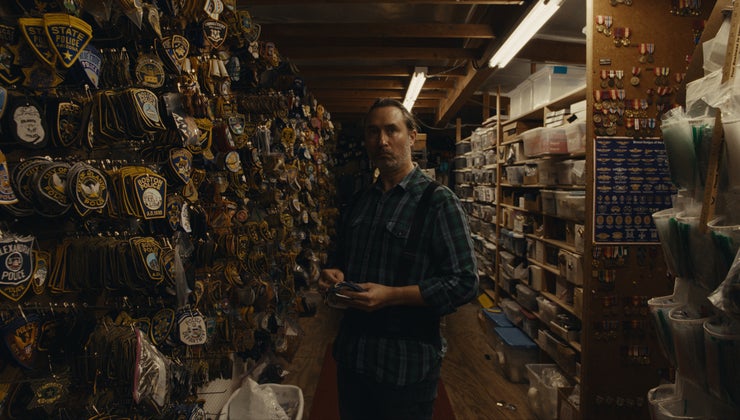
About ten months ago, Midnight Movie Club premiered on PREVO. Thanks to the instantly iconic design of its uncanny villain, The Ticket-Taker, or to its setting, LA’s famous Gardena Cinema, or to its haunting, warbled score reminiscent of The Shining, or to a combination of all these factors and more, it quickly became the most popular film on PREVO. Though several films have gotten close to taking its throne, none have – at least, not yet. So, when director Alexander Beale approached us back in June with his vision for the sequel – and how PREVO might be involved with it – it was an easy yes. And now, you can see the culmination of all of the effort that Alex and his team put into the sequel – not just over the past few months, as it was shot and then edited in Los Angeles, but long before that, as Alex penned the script for Midnight Movie Club II (and, on top of that, a feature-length adaptation of Midnight Movie Club, which I have already read and very much hope PREVO will be part of someday in the not-too-distant future). Midnight Movie Club II is the first of many PREVO Original shorts we’d like to partner with filmmakers to create, and we’re already looking for the next one. We won’t be chasing established names. Instead, I want us to keep working with the caliber of filmmakers we’ve been premiering all along – the ones who have already trusted us with their films, and the ones who will – and to help them finance, produce, develop, and market whichever shorts they’re dreaming of making next. Stay tuned. |
|
|
|
From the Notes Reviews for Midnight Movie Club II
|
|
|
|
“I screencast this to my TV and had to watch from between my fingers! Scary good!!” |
|
“Jumped out of my chair!! The music was really good too. For sure a very worthy successor to the original!” |
|
“Literally, I found myself holding my breath to see what would happen next!” |
|
“That’s a new look for the Ticket Taker! Reminds me of Twisty from AHS… I like it!” |
|
“More people need to see short films like this! I want to see more out of this world, and I hope there is a Midnight Movie Club 3 in the works!” |
|
|
Watched it? Leave a Note under the film. It goes straight to the filmmaker, and every Note counts toward next week’s chart.
|
|
|
Not a member yet? Your ticket is on us. Use code TWRTICKET for a free first month of PREVO. That covers Midnight Movie Club II, the rest of 13 Nights of Horror, and everything else on PREVO. |
|
|
|
|
Criticism Digger’s leap of faith By Miles Stephenson, Chief Film Critic · On Digger
|
There comes a time in every artist’s life when they feel they have to capture the problems of their art in their art. When they’re just starting out, they make movies or write books about life, things that happened, things that could happen. A guy wakes up, he falls in love or fights this person or goes on an adventure, and his life changes. The artist gets some success from that type of story and people recognize their work and suddenly the fourth wall is broken by the world’s recognition and their identity as “recognized artist” becomes the subject of their work. Sounds dreadful, doesn’t it? Fellini may have invented the genre with 8½ (1963), a movie where a better-looking version of himself floats through sets, mistresses, and dreams on a journey through the artistic process of its own creator. If Fellini invented it, it was refined by Truffaut in Day for Night (1973) and Fosse in All That Jazz (1979), the latter of which emphasized a particularly American brand of drug-abusing self-destruction which has become synonymous with the on-screen “troubled artist.” Later, Altman skewered his own Hollywood in The Player (1992) and Spielberg captured the real-world effects of his filmmaking (like the sense of voyeurism and alienation he gets from his own life) in The Fabelmans (2022). With his camera held up to his life, the artist is sometimes kept at a distance from people. Or maybe they present a version of themselves to the world which is alien to their real self. How could an artist not engage with these themes in their own work? Sometimes this genre falls flat. When I watched Wes Anderson’s Asteroid City, I found its overly meta navel-gazing about the meaning of being an artist to be too self-important and even dreadful (and I say this as a Wes Anderson enthusiast). Other times this genre is revolutionary. When I saw Megalopolis, where Adam Driver’s architect stands in for Coppola as a troubled artist pushing the form forward, surrounded by corrupt bean counters as he manipulates time itself, I felt like the genre was taking its next great leap forward. When Coppola wrote the script for Megalopolis decades ago, his burgeoning project to remake American cinema, Zoetrope Studios, had just failed. “Is this society, is this way we’re living, the only one that’s available to us?” asks Adam Driver. Really Coppola is asking us if movies have to be the way they have been or if there are new ways open to us. Digger is one of these new ways; its director Iñárritu took Coppola’s charge to heart. It is a grating, full-throated, often grotesque movie about the excesses of man, his ego, his consumption, and his defiling of the earth. It’s strange then that I found myself so joyfully entertained, especially by Cruise. His performance of the larger-than-life anti-hero-meets-villain Digger Rockwell gives us a cocky, exuberant, playful Tom Cruise we haven’t seen since perhaps Collateral (2004). I love Top Gun: Maverick and Mission: Impossible as much as the next guy, but Maverick and Ethan Hunt are restrained, prudent boy scouts compared to the Dionysian train wreck of Digger Rockwell. His appetite empties the oceans and his greed corrupts the nations. He is the American Berserk. He’s Billy Bob Thornton in Landman. Cowards will say he’s Big Business, Big Oil, or every Bush-era neoconservative rolled into one, but really he’s every American who ever existed. He’s the special kind of anti-hero/villain who reminds us of the million little hypocrisies and sins within all of us, and does so while making us laugh and shake our heads at the sheer audacity of his character. Now unfortunately we have to discuss a rather dull concept: is Digger a climate-change movie? The short answer is no. Digger is a movie about how reality is constructed and about the inability of art to solve our greatest problems. It’s a satire of the kind of self-serious social commentary films that have come before it. When discussing the genre of artists wrestling with the self and their own artistic process, one has to mention Charlie Kaufman’s Synecdoche, New York (2008). It’s a movie in which a theater director, played poignantly by Philip Seymour Hoffman, builds a play that increasingly mirrors his own life and mortality. For this reason, some have taken to calling Digger a Charlie Kaufman Don’t Look Up (that terrible climate-change “comedy” which represents the kind of crudeness it means to attack). Or “Synecdoche, Al Gore,” as one Letterboxd user jokes. By this they mean that the director Iñárritu has brought a kind of postmodern, surreal, meta-fictional storytelling to bear on “climate-change movies.” Some say Tom Cruise’s character is Iñárritu processing his relationship with Leonardo DiCaprio after The Revenant (a theater director yells at Tom Cruise’s character at one point saying that he’s very talented but a selfish ass to work with). Others say Iñárritu is parodying Adam McKay (for Don’t Look Up) and other exponents of that kind of Aaron Sorkin liberal social commentary. But Iñárritu elevates this even further by (SPOILERS) revealing that the story of Digger is actually a play within the movie. He splits the narrative into two contiguous storylines: one the “real” world in which actors like Tom Cruise’s Curtis Markson prepare for their roles in a play and two the “fictional” world of the characters within the climate crisis. For some, this meta device, this story within a story, will be too off-putting and polarizing. Already headlines flood the trades about Digger’s box-office flop, projected to lose $245 million, and the general bad taste left in the mouths of its viewers. My response to this? Grow up. Digger is wacky and unconventional, but it’s a far more tame movie, both formally and narratively, than some of its predecessors like Megalopolis. The way people talk about movies nowadays would make the Puritans regard them as priggish; movies can be more than A24 horror flicks and franchise action blockbusters. If this movie is too “far out” for you, I think you need to watch more movies. That said, the particular presentation of its story may not be everyone’s cup of tea. Many of the characters are vulgar and unlikable. There’s vomiting, dead cats, and frozen bodies. I’m not saying everyone has to like those things; I’m saying Digger gives us a much-needed expansion of our idea of what a story can be. And it’s a genuine good time. So go see it. You don’t have to agree with Iñárritu, enjoy Digger Rockwell as a person, or even seek out more stories in this strange meta genre we have inherited from Fellini. All you have to do is go to a theater, give yourself over to someone else’s vision for a couple hours, and feel something in an unconventional way. |
|
Editor’s note: Digger has since left most of its theaters, and no digital release date has been announced yet.
|
|
October 19 – 31 13 Nights of Horror Seven nights in. Six to go.
|
One PREVO horror short a night through Halloween, some brand new and others PREVO classics. Here is every night so far; the rest stay a mystery until their night arrives. |
|
|
|
Tonight · Night 7
|
|
|
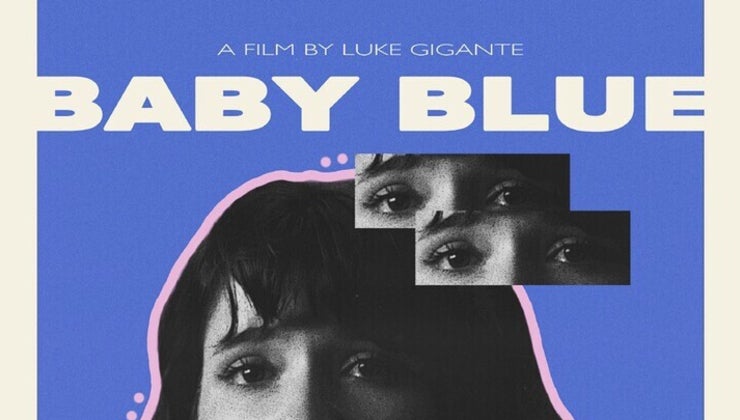
Baby Blue Directed by Luke Gigante · 12 minutes · Horror An expecting mother suffers through a series of increasingly strange encounters with family and friends at her gender reveal party. Think Hereditary meets Rosemary’s Baby. Hannah Deale stars as Mary, with an incredible score by Molly Murphy. Luke Gigante also directed last night’s pick, Mother_Mary.
|
|
|
|
Weekend Read Spotlight · Night 2 Cut Me If You Can A film by Sylvain Loubet and Nicolas Polixene · 21 minutes · Horror comedy
|

|
PREVO premieres usually land on Thursdays, but with a run of horror to fit in before Halloween, Cut Me If You Can arrived two days early, on Tuesday, as Night 2 of 13 Nights, and its first time streaming anywhere in the U.S. The turnout so far has already given recent PREVO hits, like The Actor and Projectionist, a run for their money. |
| • | The premise: Stuck in the loop of a horror B-movie, two Black stereotyped characters decide to reject the script. But the film has other plans. |
|
| • | The movie is the villain. Michelle (Djaka Souaré) and her boyfriend, Mike (Anthony Lalor), die at every screening of the slasher they’re trapped in, until Michelle decides to kill the killer (Marshall Fox) instead. The film isn’t going down easy, though, and starts fighting them itself, even going so far as to turn itself, briefly, into a black-and-white silent film at a moment when audio is crucial to Mike and Michelle’s survival. |
|
| • | The split screen. Loubet and Polixene push the premise about as far as it will go. At one point, Mike and Michelle use a split screen to talk to each other across the frame. |
|
| • | The theater. It was shot in and around Fresno’s Warnors Theatre, a movie palace that opened in 1928, with the film’s own title up on the marquee. |
|
| • | The festival run. It has played festivals on five continents, including Clermont-Ferrand, the largest short film festival in the world, and won both the Grand Jury Prize and the Audience Prize at Fenêtres sur Courts in Dijon. |
|
|
Available to stream in the U.S. only.
|
|
|
|
The Leaderboard The PREVO Ten, No. 09 Measured October 12 – 18, 2026
|
| 01 | Midnight Movie Club Dir. Alexander Beale · ▲ 2 |
|
| 02 | The Actor Dir. Alexander Hagani · ▼ 1 |
|
| 03 | Wight Dir. Jonathan Chen · ▲ 1 |
|
| 04 | Capsule Dir. Dani Kind · ▲ 1 |
|
| 05 | Door Dir. Alexander Beale · ▼ 3 |
|
| 06 | Feed Your Muse Dir. Brendan Beachman · Back |
|
| 07 | Projectionist Dir. Pat McCoy and Nicolas Alexandre · ▲ 1 |
|
| 08 | Extraña Dir. Ryan Fajet and Paloma Ronquillo · ▼ 1 |
|
| 09 | Method Dir. Ryan Stephen Holly and Nkosi Roma · New |
|
| 10 | Phil Gunderson Teaches Screenwriting Dir. Nishanth Ramasubramanian · New |
|
|
|
Free to submit, year-round, any genre. New premieres every Thursday.
|
|
PREVO Independent film, curated.
|
|