|
| NO. 78 · NOVEMBER 15, 2026 |
|
|
In this issue
|
|
Where The Bris Goes Next
A 13-minute short about an adult circumcision might not sound like it has a feature in it. Omri Horowitz begs to differ, and he’s already written the screenplay to prove it.
|
|
|
|
Paul Schrader’s Revelation on the Big Screen
Nearly 40 years after it drew protests and death threats, is The Last Temptation of Christ blasphemy, or a deeply Christian work of art? Miles Stephenson makes his case.
|
|
|
|
New on PREVO This Week
Three new films, featuring a horror short that might make you paranoid the next time you check the clock, two best friends with a no-limit credit card, and a very awkward family lunch.
|
|
|
|
The PREVO Ten, No. 12
Three of the ten films on the chart come from the same director. See if you can guess who it is.
|
|
|
|
Editor’s Note
By Ryder McNeal
|
This Thursday, the 19th, we premiere The Bris, arguably the film I’ve been most excited about since our first Original, Midnight Movie Club II, in late October. I’m a big believer in the raunchy-with-a-heart comedies of the 2000s, and The Bris, as its writer Omri Horowitz will tell you, was very much made in that same spirit. Not to mention, it’s technically excellent on every level, has a recognizable cast (perhaps none more recognizable than Michael Kostroff, whom you’ll know from The Wire, Billions, Spider-Noir, HBO’s underrated The Wizard of Lies, Law & Order, and a million other things), and is built to be adapted into a feature. Ahead of the premiere, we asked Omri about the feature-length version he’s developing; below, you’ll find everything you need to know about it. And for those who want even more from Omri, we have a roughly 30-minute video interview with him dropping alongside the short, Thursday at 8 AM ET, as always. Meanwhile, our Chief Film Critic, Miles Stephenson, has just wrapped up his latest documentary, Rocky Turns 50, for which he met such legends as producer Irwin Winkler and Dolph Lundgren. With Rocky in the rearview, though, Miles is turning his attention to the theme of religion in film. Few writer-directors on the planet have covered religion as thoroughly as Paul Schrader, the writer behind films such as Taxi Driver, First Reformed, and The Last Temptation of Christ. Naturally, Miles thought to reach out to him first. Somewhat surprisingly, Schrader agreed to an interview! Below, in one of his best pieces, Miles examines Schrader’s filmography, how it (and Hollywood at large) deals with religion, and even, briefly, his own questions about God and theology. Don’t miss this one! And we’re rounding out the issue with the three new films on PREVO this week: 11:34 (for those who can’t quite let go of October’s scares), The Dispute (shot vertically way back in 2019, before it was fashionable), and Payasam and Other Careful Processes, which, like this Thursday’s The Bris, deals with some fun family dynamics. You’ll also find the PREVO Ten at the end of this issue, tallying up the ten most watched and most talked-about films on PREVO from the week of November 2 – 8, with Midnight Movie Club back at No. 1. That’s all for now. |
|
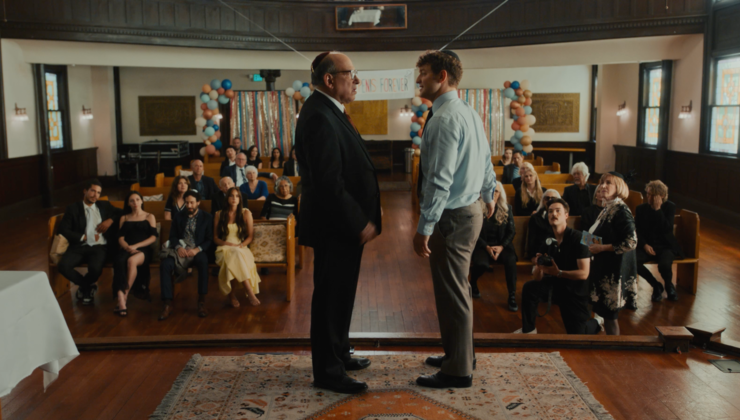
Next on PREVO The Bris Some traditions cut deeper than others.
|
Premieres Thursday, November 19 |
|
|
|
Written by and starring Omri Horowitz · Directed by Alec Bewkes · 13 minutes · Comedy
|
Co-starring Michael Kostroff, Zoe Oedekerk, and Joanne Baron. Official Selection, 2026: LA Shorts International Film Festival, DIFF Shorts, San Jose International Short Film Festival, and Lone Star Film Festival. |
|
From the Filmmaker Where The Bris goes next Notes from Omri Horowitz, writer and star
|
|
The Bris premieres on PREVO this Thursday, November 19. Here are Omri Horowitz’s notes on the feature-length version, lightly edited.
|
The Bris is an Apatow-style comedy that’s unapologetically Jewish, but with plenty for anyone who’s ever been in love, dealt with impossible in-laws, or questioned the traditions they grew up with. Think Meet the Parents meets Nobody Wants This, with a healthy dose of Shiva Baby. Irreverent, character-driven, and rooted in the belief that Jewish stories can be culturally specific, broadly entertaining, and about a hell of a lot more than religion. An adult circumcision is a pretty outrageous way to win someone’s blessing to marry their daughter. It’s also where the feature begins. The short’s public ceremony becomes the feature’s cold open, before we rewind to discover how Isaac got himself into this mess in the first place. By the time we return to that fateful day, the stakes have changed, the relationships have been tested, and the ceremony doesn’t exactly go according to anyone’s plans. We’ll leave it at that ;) Along the way, we get to know Isaac and Rachel as a couple navigating love, commitment, and the competing expectations of two families. Rachel’s father, Abe, is hell-bent on testing Isaac’s cojones (and foreskin) before accepting him as a son-in-law. Meanwhile, Isaac’s family stresses him out in other ways, and his best friend, Levi, is all too happy to egg him on as Isaac desperately tries to keep his relationship, sanity, and anatomy intact. Between the family politics, romantic complications, and increasingly desperate attempts to avoid going under the scalpel, there’s plenty of room for things to get worse before they get better. With a completed feature screenplay and five festival selections for the short, including two Oscar-qualifying festivals, The Bris is now moving into its next chapter. Early conversations are underway with comedy and romcom-driven film producers, with an eye toward bringing a distinctive cultural perspective to a genre that continues to resonate with audiences and streamers alike. Packaging is being approached with flexibility, but not at the expense of what makes the material work. There’s room to lean into a harder-R, outrageous studio-style comedy, embrace the warmth and accessibility of a streamer-friendly romantic comedy, or land somewhere in between. The priority is finding collaborators who understand both the commercial potential and the particular voice behind it, while building the strongest possible ensemble around the material. For creator, writer, executive producer, and star Omri Horowitz, the ambition is simple: make something that gets people laughing, gives Jewish characters a little more room to be messy, funny, romantic, and human, and proves that sometimes the most ridiculous sacrifices are the ones we make for love. Just preferably not with a scalpel. |
|
|
|
|
|
Criticism Paul Schrader’s revelation on the big screen By Miles Stephenson, Chief Film Critic
|
This coming Tuesday, November 17, my latest documentary on the making of Rocky and its 50th anniversary, Rocky Turns 50, drops to the streaming platform Fox Nation. Like molding clay into a piece of pottery, making a doc is a slow shaping process. After countless hours in the cutting room, traveling across the country for shoots, and researching archival footage, I’ve finally sculpted it into the right shape, something I’m proud to share. We have interviews with Stallone and his brother Frank about their childhood, producer Irwin Winkler about Stallone’s original pitch and the fight to make the movie, composer Bill Conti on the iconic score, editors Scott Conrad and Richard Halsey on the genre-defining training montage, Dolph Lundgren on his role as the villainous Ivan Drago in Rocky IV, and PJ Byrne on playing producer Irwin Winkler in the newly released I Play Rocky. It’s been a genuine joy to work on this, and it’s given me a new appreciation for Rocky’s role in the explosive creative revolution which was New Hollywood. I’m now at the moment where I can turn my attention to my next project. This time around, I want to make a documentary that explores the theme of religious faith in film. I was baptized in a Presbyterian church. I think about God now and then, though I don’t attend church regularly. Like most modern people, I go through life in a secular, atomized way. But the more movies I watch that approach the theme of God and religious faith, the more I think it would make for an interesting subject of a documentary. How should we show God on screen? How should we portray the events in the Bible? Who was Jesus Christ? One of the first people I reached out to for an interview was writer-director Paul Schrader. To my surprise, he said yes. The themes of God, predestination, moral decay, guilt, and the search for grace and redemption can be seen up and down Schrader’s filmography. He was raised in a strict Dutch Calvinist house in the Midwest, the same kind of environment his characters in Hardcore (1979) break away from. In Taxi Driver (1976), Schrader explored man’s search for meaning in a modern, morally decayed world. In a sense, it’s a crisis-of-faith movie, or at least a crisis of spirituality. The movie reverberates with a dark, existential angst, reflecting Schrader’s worldview at the same time as he lived alienated in his car, mixed heavy drinking and depression, and struggled with thoughts of suicide. Then in First Reformed (2017), Schrader imagined a reverend of the Dutch Reformed Church wracked with anxiety about ecological doom. It’s an example of Schrader’s style of slow cinema. In interviews, Schrader speaks of his transcendental style of filmmaking: holding shots too long, avoiding cutting, always withholding from the audience and using dead time to create a sense of place, a grounded moment in time beyond images on a screen. Drawing from Bresson’s minimalism, Ozu’s withholding and restraint, and De Sica’s sense of a film space that’s happening beyond the audience’s purview, Schrader believes he can turn the viewer into an active participant in the world of the film as opposed to a passive reactionary to formal stimulation. Importantly, Schrader says once this viewer is leaning towards him, perhaps even bored with all the dead time he has given them, he has to free them. He has to do something unexpected. Hence the wild, explosive final sequence of First Reformed. But there is perhaps no film in Schrader’s career that so directly confronts God and Christian theology like The Last Temptation of Christ (1988). On one level, the film is a miraculously Christian work of art, following the story of Jesus Christ from the Gospels, shot in the deserts of Morocco, produced in an industry that seems at odds with the subject matter. Yet on the other hand, in showing a very human side of Jesus, the film received its own scarlet letter and was shunned by much of the American Christian world as “blasphemy.” It’s fair to say Hollywood and Jesus Christ don’t mix well. Scorsese received death threats upon the film’s release, and the original studio behind the movie, Paramount, had pulled out years earlier amid similar protests. So who’s right? Are Schrader and Scorsese sacrilegious troublemakers trying to besmirch God? Or are they Christian artists trying to explore the life of Jesus in their work? In the movie, Willem Dafoe shows us a new side of Jesus. He laughs, dances at a wedding, drinks wine, jokes, and even commits acts of violence. In one scene, as Dafoe’s Jesus confronts the money-changers, Jesus says, “I’m the Saint of Blasphemy. Don’t make any mistakes. I didn’t come here to bring peace. I came to bring a sword!… This temple will be torn down in three days, torn down to the ground!… You think God belongs only to you? He doesn’t. God’s an immortal spirit who belongs to everybody.” It shows a more radical, bellicose side of Jesus Christ and his protestation against the Pharisees than most modern Christians are comfortable with. It shows Jesus as a crusader, a revolutionary, a chaotic force for good in the world. Personally, I came away from the movie with a greater admiration for Jesus and what he accomplished in his time. And yet the question of blasphemy still haunts the picture. This is made even more controversial by the final sequence of the movie. As Jesus is crucified, Schrader and Scorsese take us into his final thoughts, his last temptation so to speak, and we enter a kind of dream sequence where Jesus imagines his life as a happy, simple man instead of a divine martyr. In this imagined alternate reality, Jesus weds Mary Magdalene, has sex with her, raises children, works as a carpenter, and lives a simple village life. At the end of the film, this alternate reality is revealed to be just a vision, and we return to “real life” where Jesus dies on the cross after declaring “It is accomplished!” Still, the mere demonstration of a non-virginal Jesus sleeping with a woman (a woman who might’ve been a prostitute no less) was bound to ruffle the feathers of Christians. Schrader says the original book his film was adapted from was indeed blasphemous. He says that Nikos Kazantzakis’ book of the same name argues that “It is not God who creates us, but it is we through our striving who create him.” The book says that Jesus was creating God, and this idea is of course blasphemous, but it’s blasphemous in a theologically interesting and engaging way. My takeaway from this is that no, Schrader did not write this script and make this movie with Scorsese to denigrate God. He did it to humanize Jesus Christ and explore an unorthodox reading of the New Testament, and he did it to explore his faith. The more I watch films that deal with themes of religious faith, the more I wonder if there’s an inherent conflict between Christianity and cinema. After all, huge numbers of Christians will always and inevitably be unhappy with certain portrayals of Christ and God in stories. In researching archival footage for this doc, I found newsreels from the 1980s of priests and religious figures decrying Schrader’s film. For some Christians, there is a reflexive dislike for movies they haven’t even seen, as if it is the duty of a Good Christian to avert their eyes from complicated art. I resent this idea. There is a reason that the Pope and the Vatican release lists of their favorite films. There’s a reason that so many of our great artists, from Michelangelo, Caravaggio, and Raphael to Terrence Malick, Robert Bresson, and Cecil B. DeMille, were and are Christians. And there’s a reason that every culture that ever existed found meaning in both visual art and religion. I’ll be interviewing Paul Schrader in early December, and until then, I’ll be thinking about these questions. Watch The Last Temptation of Christ if you haven’t seen it. And when you watch it, ask yourself how you feel about the version of the Gospels and the life of Jesus Christ these artists have created. I think you might be surprised by how profoundly he can jump out of the screen at you, by how human he may appear, how relevant. And if that doesn’t bring you closer to seriously thinking about God and theology, I’m not sure what will. |
|
|
|
Now Streaming New on PREVO this week Three premieres · Thursday, November 12, 2026
|
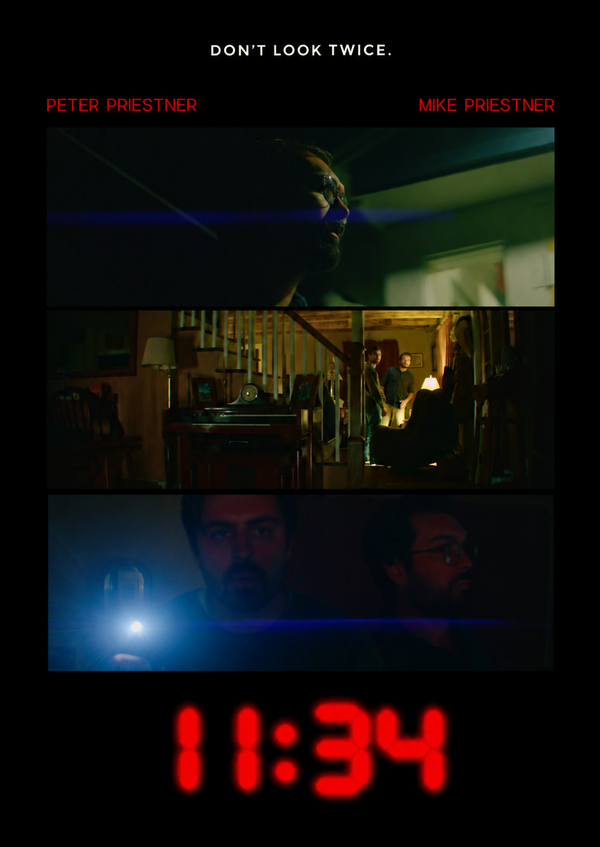 | Written and directed by Scott Barbella-Landy · 4 minutes · Horror When a childhood superstition about 11:34 draws an answer from the dark, two brothers try to escape without checking the time again. When they were kids, the brothers had one rule: if a clock says 11:34, don’t look at it again until the minute’s up, because upside down, it spells HELL. This one is scary and tight, and a testament to how effective great sound design and a few well-deployed handheld shots can be. |
|
|
|
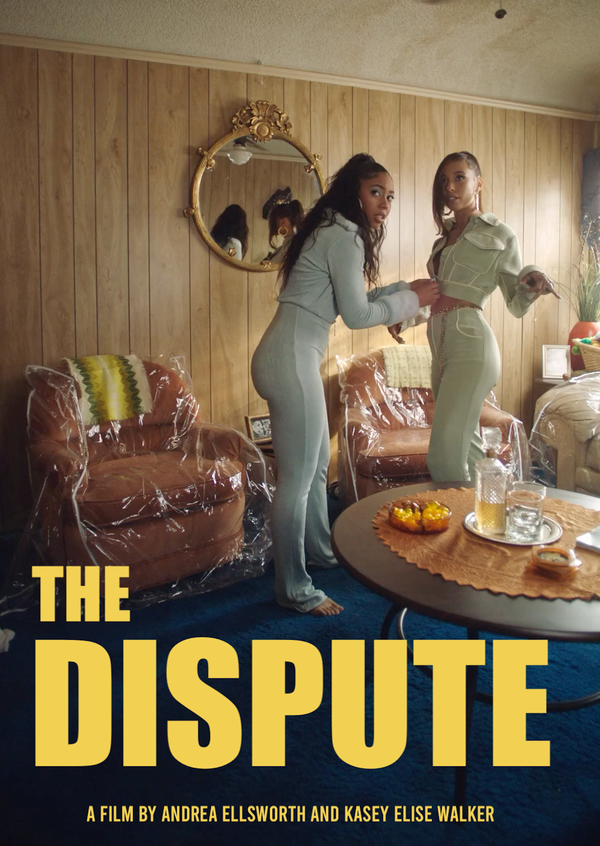 | Directed by Mikey Alfred · 13 minutes · Comedy Two best friends from South Central Los Angeles fantasize about living lavishly when a pre-approval letter for a credit card with no set spending limit suddenly arrives in the mail. Its two writers and stars, Kasey Elise Walker and Andrea Ellsworth, were later picked by the Sundance Institute to develop it into a feature. It was shot vertically, so if you can, watch it on your phone. Andrea Ellsworth also stars in Netflix’s The Vince Staples Show. |
|
|
|
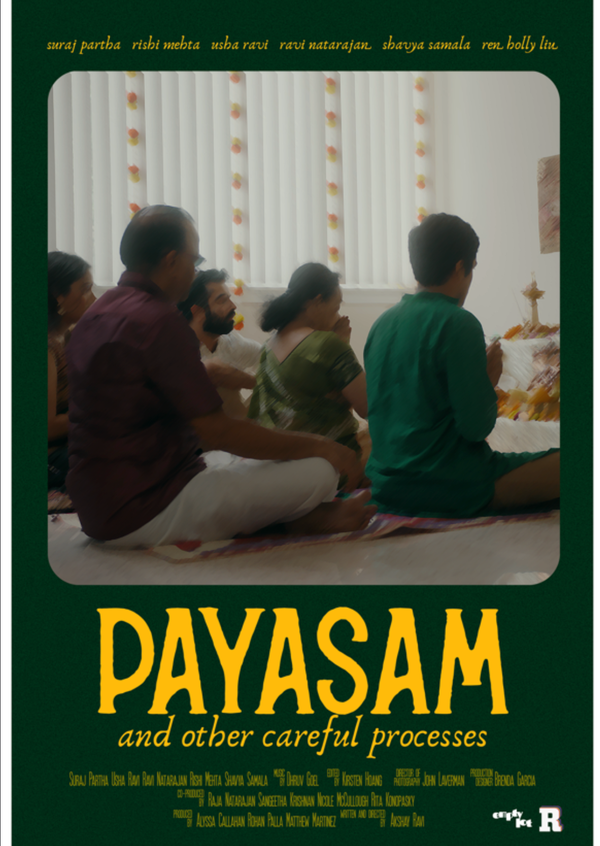 | Written and directed by Akshay Ravi · 11 minutes · Comedy A conflict-avoidant boy brings his girlfriend home to meet his parents – but where she was ready to take the relationship to the next step, he hasn’t even told his parents they’re dating. With the holidays coming up, this one is for anyone who’s had trouble with their in-laws or meeting their partner’s family. It’s rare to see a short with a cast this big where everyone more than pulls their weight, and this one does. |
|
|
|
|
The Leaderboard The PREVO Ten, No. 12 Measured November 2 – 8, 2026
|
| 01 | Midnight Movie Club Dir. Alexander Beale · ▲ 2 |
|
| 02 | The Actor Dir. Alexander Hagani · ▲ 2 |
|
| 03 | DIY Dir. Tony Gardiner · ▼ 2 |
|
| 04 | Man Baby Dir. Aaron Murtagh · New |
|
| 05 | Wight Dir. Jonathan Chen · ▲ 3 |
|
| 06 | Cut Me If You Can Dir. Sylvain Loubet and Nicolas Polixene · ▼ 4 |
|
| 07 | Midnight Movie Club II Dir. Alexander Beale · ▼ 1 |
|
| 08 | My Kind of People Dir. Joe Picozzi · ▼ 3 |
|
| 09 | Door Dir. Alexander Beale · ▼ 2 |
|
| 10 | Extraña Dir. Ryan Fajet and Paloma Ronquillo · Back |
|
|
|
Leave a Note under any film on PREVO. It goes straight to the filmmaker, and every Note counts toward next week’s chart.
|
Not a member yet? Your ticket is on us. Use code TWRTICKET for a free first month of PREVO. That covers this week’s three new films, The Bris on Thursday, and everything else on PREVO. |
|
|
Free to submit, year-round, any genre. New premieres every Thursday.
|
|
PREVO Independent film, curated.
|
|